





Blog
JVX Metal Oxide Varistors as Alternatives for Vishay MOVs in Power and Industrial Applications
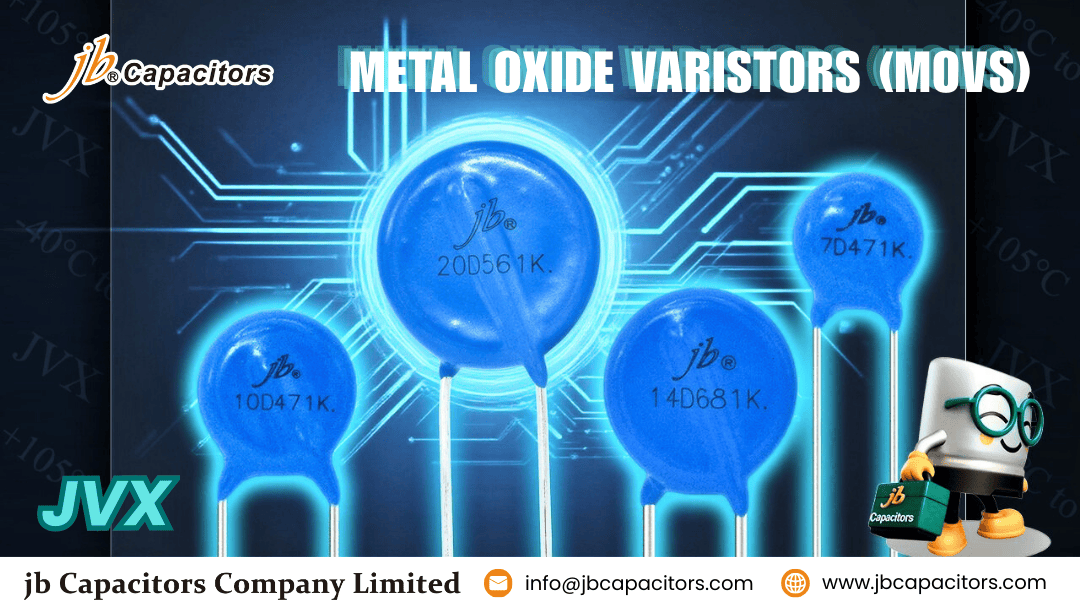
Quick overview video for teams evaluating MOV surge protection options and class-level alternatives.
JVX MOV Series Overview for Alternative Evaluation
If you are qualifying a Vishay MOV alternative, engineering typically starts from varistor voltage class and disc diameter, then confirms performance under the actual surge profile. Procurement focuses on availability, repeatable sourcing, and clear selection support.
However, teams often need a practical way to align on the first screening criteria before entering detailed surge testing. Therefore, the jb JVX Metal Oxide Varistor series is positioned for class-level evaluation across power and industrial designs, including industrial power supplies, AC-DC, SMPS, appliance control boards, motor drives, inverters, and surge protection modules.
Compliance-safe wording: References to other brands are for class-level search and evaluation context only. This page does not provide direct part-number cross references. As a result, final selection must be validated against your application requirements.
Why JVX Is Considered a Vishay MOV Alternative
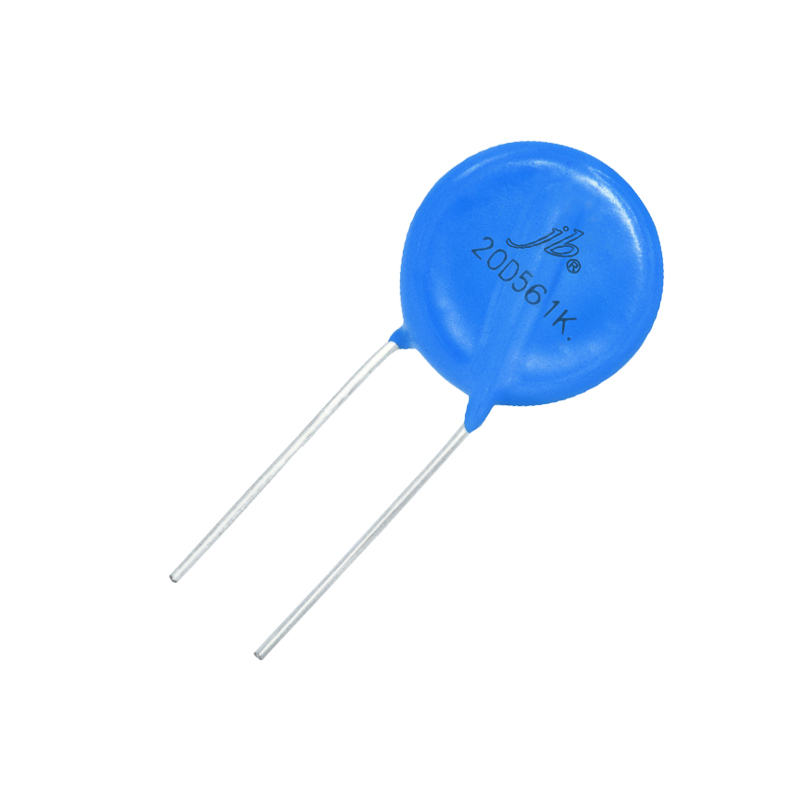
JVX Metal Oxide Varistors from jb. Selection should be made based on datasheet parameters and application needs.
Why teams shortlist JVX for alternative evaluation
In practice, JVX is commonly evaluated because it supports wide varistor voltage coverage and multiple disc sizes, helping teams map to typical MOV classes used in power and industrial systems.
In addition, per the JVX series specification highlights provided in the project brief: varistor voltage coverage 18V to 1800V, disc sizes 5D to 20D, operating temperature -40°C to +105°C, and RoHS / REACH compliance.
Zinc Oxide MOV Structure and Surge Protection Principle

Structure diagram for typical ZnO MOV construction reference. Selection must follow the official datasheet.
A zinc oxide MOV uses a ceramic grain boundary structure that behaves as a highly non-linear resistor. Under normal operating voltage, leakage current remains low. However, when a transient overvoltage exceeds the device’s threshold, impedance drops rapidly and the MOV absorbs surge energy to clamp the voltage, helping protect downstream components.
Engineering note: System-level suitability depends on system voltage, surge waveform, safety standard requirements, and placement in the circuit. Therefore, confirm design assumptions against the official datasheet and your compliance context.
JVX Varistor Voltage Range and Selection Logic
JVX covers a broad range from 18V to 1800V. As a result, teams can align on voltage bands during early-stage qualification and RFQ. Meanwhile, for exact part availability and ratings, use the official datasheet and contact jb.
Important: The bands above summarize the stated JVX voltage coverage range (18V to 1800V). However, they are not a part list. Confirm exact options via the official datasheet and jb support.
Class-Level MOV Alternative Mapping Reference
Teams often start from a familiar MOV class in an existing design, then qualify an alternative by confirming key datasheet parameters and the real surge environment. Therefore, the examples below show how JVX can be discussed at the disc-size and voltage-class level for sourcing reference.
Legal-safe note: Brand names are mentioned for search and reference purposes only. However, comparisons are at the class level and do not represent direct part-number equivalence.
Information Required for Faster MOV Evaluation and RFQ
To speed up qualification for a Vishay MOV alternative, sharing the items below usually helps align the correct MOV class and prepare an RFQ with fewer back-and-forth messages. As a result, both engineering and procurement can move faster.
Optional (if available): circuit position, photo of PCB placement, or existing BOM note. However, this is not required.
Brand names are for search and reference context only. Therefore, evaluation should be confirmed by datasheet parameters and application requirements.
Reminder: All specifications must follow the official JVX datasheet. This page is written for evaluation guidance and sourcing conversation efficiency.