





Blog
Fine Adjustment Trimming Potentiometers for Industrial Power Design
Fine Adjustment Trimming Potentiometers for Industrial Power Design
In industrial power design, output stability is not determined solely by controller IC architecture. Fine adjustment components inside the feedback loop directly influence calibration accuracy, voltage regulation stability, and long-term system reliability.
Why Fine Adjustment Matters in Power Regulation
In feedback-controlled power circuits, output voltage is defined by precise reference resistance. Without adequate fine adjustment, voltage drift and inconsistent regulation may occur across production batches and under varying load conditions.
- Improved voltage regulation stability
- Reduced tolerance deviation
- Higher repeatability in mass production
- Enhanced reliability over product lifecycle
Industry Standards and Technical References
In industrial power design and calibration practice, component selection and fine adjustment control are closely aligned with established engineering standards and reliability modeling principles.
Organizations such as the International Electrotechnical Commission (IEC) define electrical performance and safety standards widely adopted in regulated industrial systems. Meanwhile, research and technical publications from the IEEE Power Electronics Society continue to emphasize the importance of stable feedback control and precision component selection in maintaining long-term power regulation stability.
In manufacturing and calibration environments, guidelines from the IPC Electronics Manufacturing Standards further reinforce the importance of repeatable tuning processes and controlled adjustment mechanisms.
Within these frameworks, fine adjustment trimming potentiometers serve as practical implementation components that support stable regulation, repeatable calibration, and consistent industrial performance.
Multiturn Trimming Potentiometers for High-Resolution Control
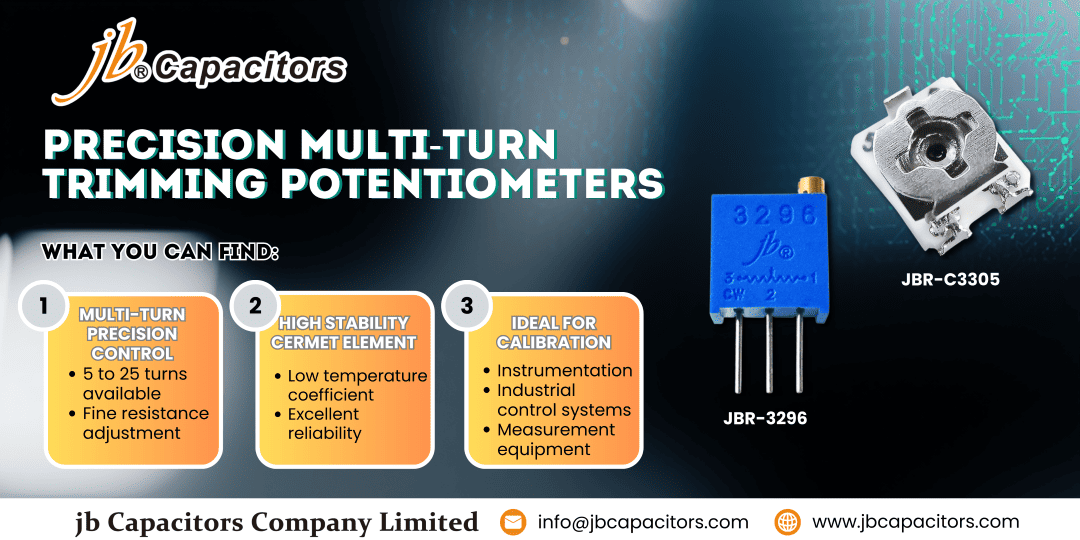
Multiturn trimming potentiometers distribute resistance change across multiple rotations, enabling incremental steps with finer control resolution. These are especially useful in regulated power supplies, DC-DC converter tuning, and calibration modules requiring precise voltage control.
Single-Turn Trimmers for Stable Industrial Calibration
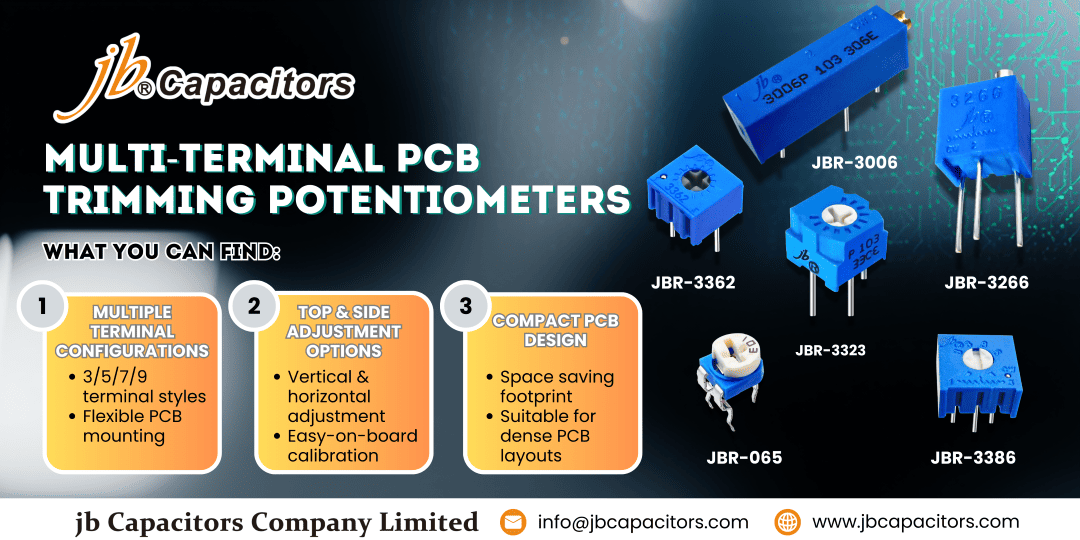
Single-turn and multi-terminal trimming potentiometers are optimized for stable one-time factory calibration and board-level voltage tuning in industrial systems.
Wirewound Potentiometers for Long-Term Industrial Stability
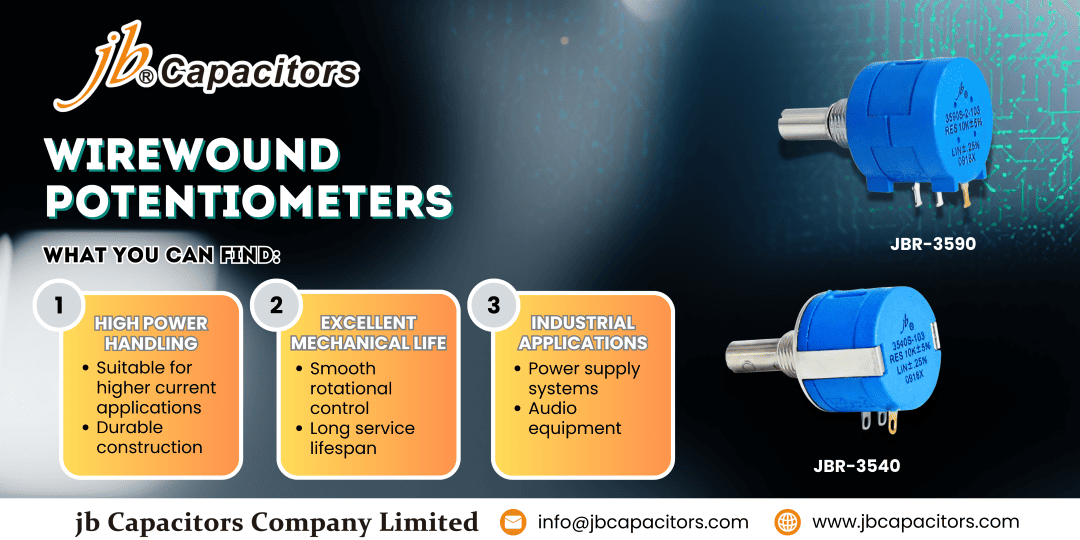
Wirewound trimming potentiometers provide excellent linearity and mechanical endurance, making them suitable for high-accuracy instrumentation and long-life industrial control systems.
Technical Comparison of Trimming Potentiometer Types
| Type | Adjustment Method | Resolution Level | Typical Applications | Engineering Advantage |
|---|---|---|---|---|
| Multiturn | Multiple rotations | High | DC-DC converters, linear regulators, precision calibration | Fine incremental control with improved stability |
| Single-Turn | One rotation | Medium | Factory calibration, board-level tuning | Simple and cost-effective solution |
| Wirewound | Multiple rotations | High | Instrumentation panels, industrial control systems | Excellent linearity and mechanical durability |
Engineering and Procurement Value
Selecting the appropriate fine adjustment trimming potentiometer enhances power regulation stability and reduces long-term field risk. For procurement teams, choosing a stable industrial calibration component improves product lifecycle reliability and warranty performance.